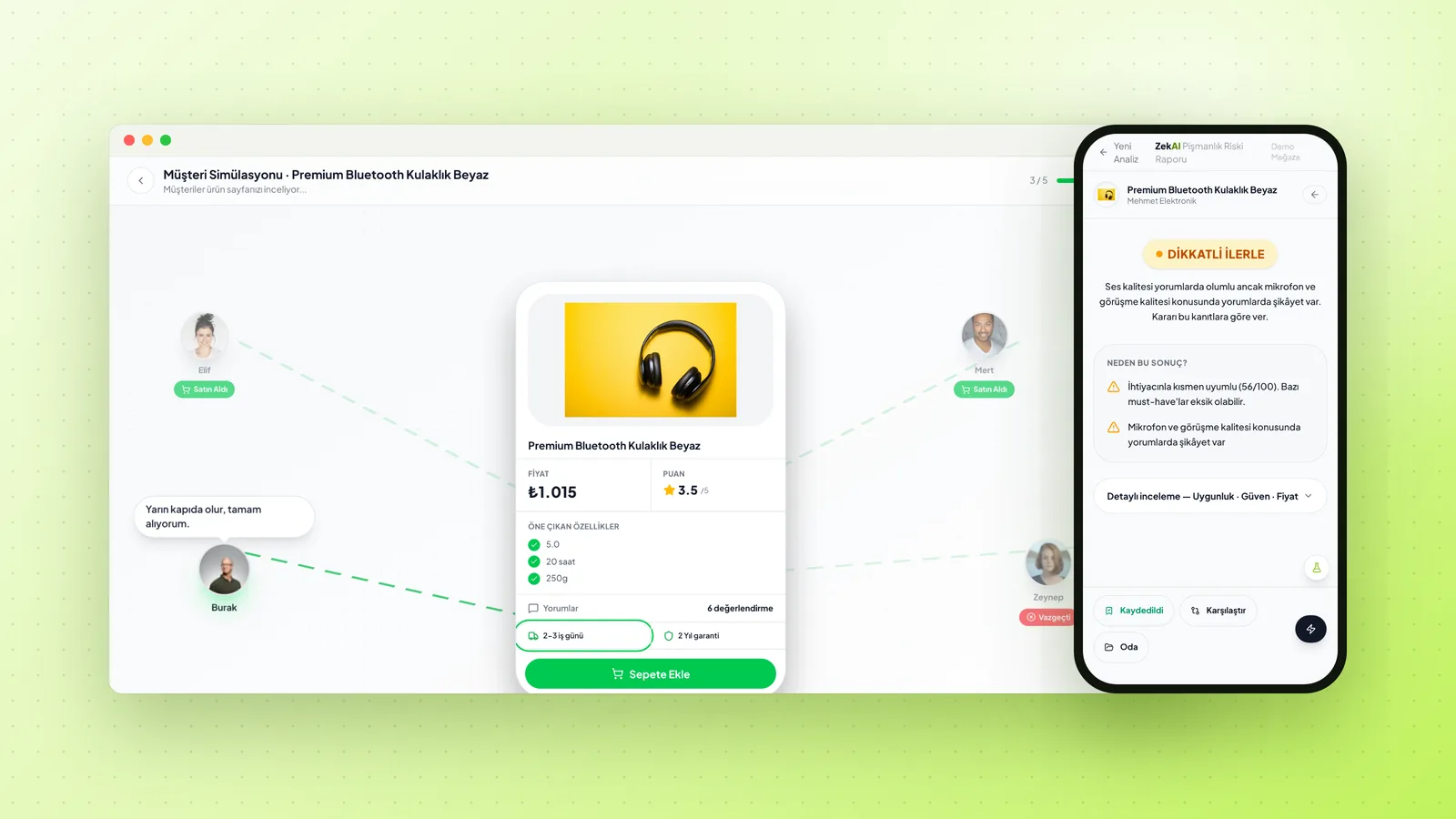
HackAthon'26 — BTK Akademi × Google × Girişimcilik Vakfı Project
ZekAI
An AI decision platform for both sides of e-commerce
An e-commerce decision platform my two-person team built in six days at HackAthon'26. A buyer pastes a product link and describes their need in their own words; ZekAI weighs the product, the reviews and the price together and gives a reasoned verdict. A seller has five different customer profiles walk through a product page and improves its content, bundles and review replies with AI. Behind it are two ASP.NET Core APIs, a FastAPI service running on Gemini and PostgreSQL. In the live demo you can sign in as a buyer or a seller with one click and try every module.
- Technologies
- Next.js 16
- React 19
- TypeScript
- ASP.NET Core 10
- Entity Framework Core
- PostgreSQL 16
- Python 3.12
- FastAPI
- Google Gemini
- Server-Sent Events
- Docker
- My role At HackAthon'26 my teammate Ayşe Mandıralı and I were a two-person team, and I was the team captain. I split the system into two products and three services, wrote the buyer side and Seller Studio's AI flows, cut the Gemini costs, set up the deployment, and reviewed and merged Ayşe's pull requests. After the competition I moved the live demo into the browser and wrote the documentation. I wrote a significant part of the code with an AI assistant (Claude Code), under rules I set.
What I did
- To show an integration we needed a store to integrate with; in the first prototype the store was a fake data layer inside ZekAI. I split it into a separate product with its own database and identity system, Akıllı Market. ZekAI reaches the marketplace through its API, not its database, using an API key the seller provides, and that split made us face real integration questions early: how a key is issued and how both sides stay consistent.
- Two kinds of clients call the marketplace API with the same Authorization header: its own frontend with a user JWT and ZekAI with the seller's API key. A small policy scheme looks at the token's shape and routes the request to the right handler, so the seller controllers never have to tell the two paths apart.
- I did not leave the purchase decision to the model. Gemini only produces four scores and evidence-backed warnings; the go ahead, proceed with care or look for an alternative verdict comes from a pure function with explicit thresholds. The same scores always give the same verdict, and the “why this result?” list on screen is the rule that produced it.
- The first version of the buyer analysis was a seven-agent pipeline built with Google ADK, so every analysis carried the cost and latency of seven calls. On the last day of the competition I cut it down to one structured call plus a Google Search market check that runs only when needed; the kombin analysis went from five calls to one.
- To never pay twice for the same question, I store every expensive output with the SHA-256 hash of its input. The analysis key includes the product's fingerprint (price, stock, title, rating, review count); when the product changes, so does the key, and no cache-clearing code is needed.
- When the Gemini quota runs out, the seller tools show a flagged sample answer with a yellow warning, while the buyer analysis ends with a clear error instead of a made-up “go ahead”. A seller seeing a sample title does no harm; a buyer seeing an invented verdict does.
- Long AI answers arrive step by step over Server-Sent Events. ZekAI's API relays the stream to the browser line by line while catching the final report for the cache; the browser never sees the AI service or the Gemini key.
- A bundle discount is split between the two products in proportion to their prices, and because every order line carries its own discount, refunds and reporting stay correct per line. The one-active-bundle-per-pair rule is also enforced in the database with a partial unique index that ignores archived bundles.
- Six months after the competition the free-tier services had gone to sleep and nobody could sign in on the live site. I gathered every network call of both frontends into one function and, in the Vercel build, connected it to a demo layer that fulfils the same contract in the browser; the rules are ports of the production code and the data is a catalogue generated from the seed. I documented every decision with its reasons, trade-offs and known gaps in the repository's docs folder, in Turkish and English.
The problem
Both sides of e-commerce ask the same question: will this product actually work? A buyer cannot check, one by one, whether a product fits their need, whether the price is fair and what the reviews really say; the result is regret and returns. A seller does not know why visitors leave without buying: is the title weak, the price too high, or are reviews left unanswered?
What it offers
With a link and a few sentences, a buyer gets a reasoned verdict, and every warning points to the review it came from. They can compare saved products against their need and weigh items bought together against a budget. A seller sees which customers a product page loses and why, and improves its content, images, bundles and review replies in one place.
-
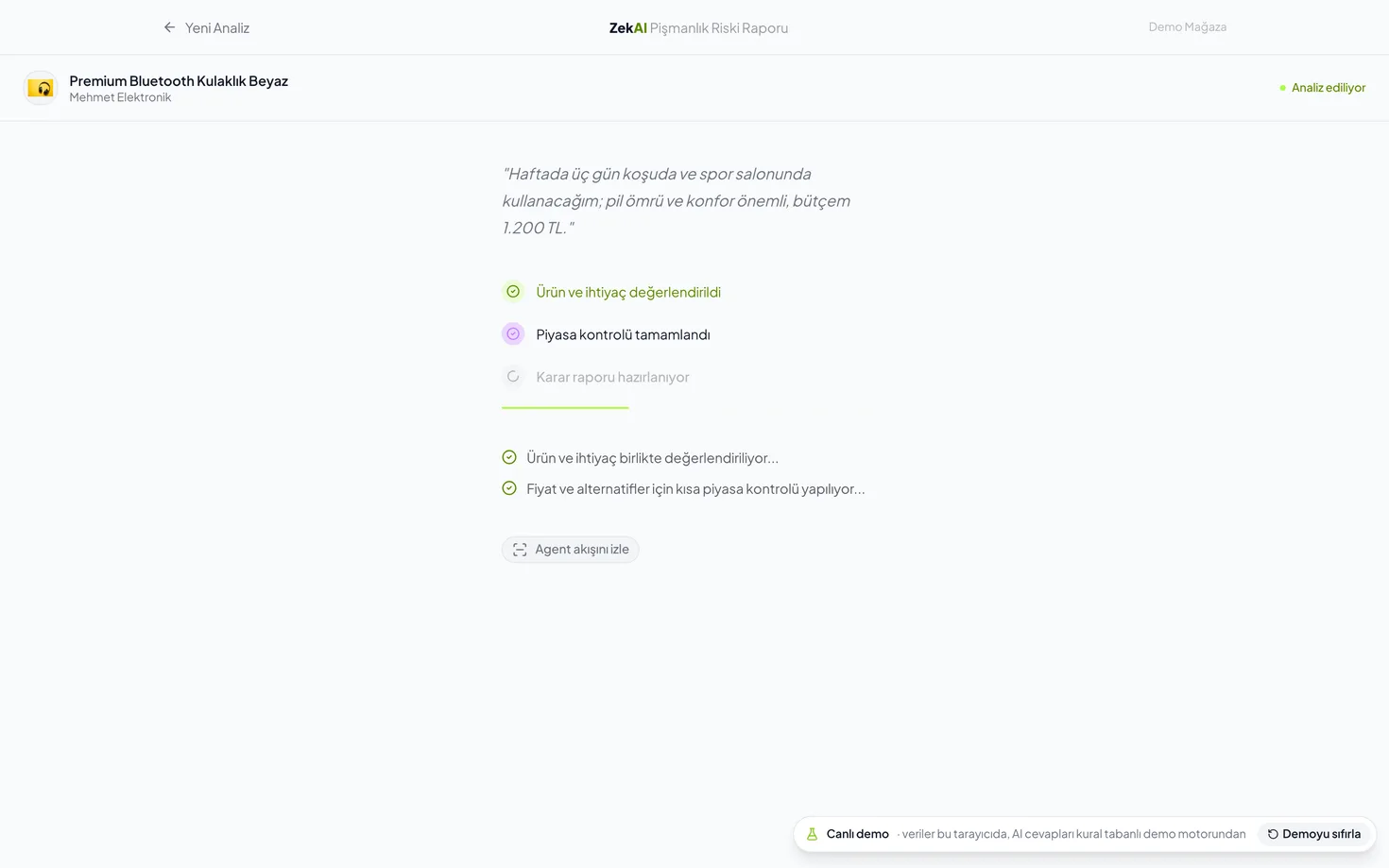
The live analysis flow: advisor, a market check if needed, then the decision; each step completes when its own result arrives -
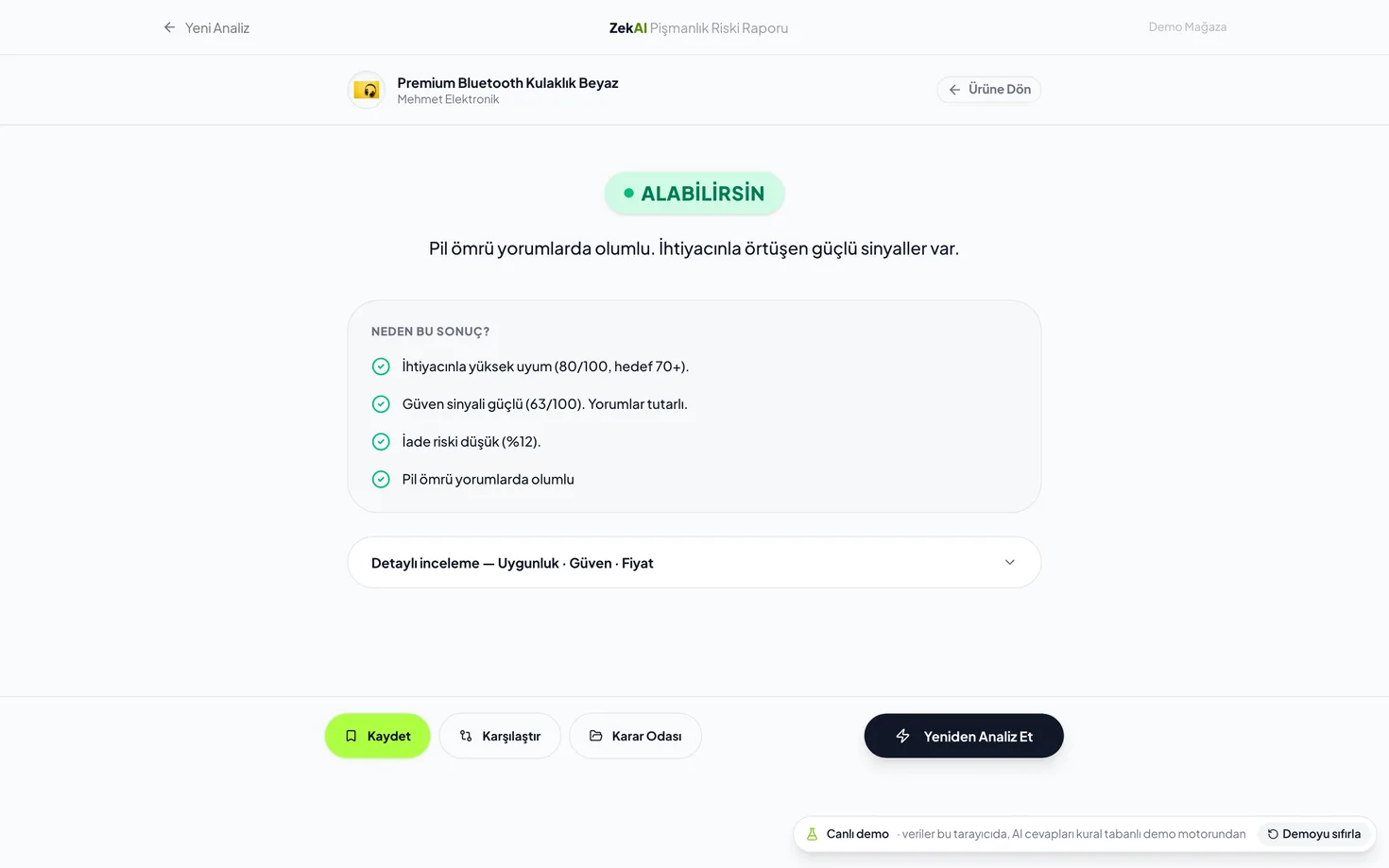
The verdict screen: a go-ahead verdict and the list of rules that produced it -
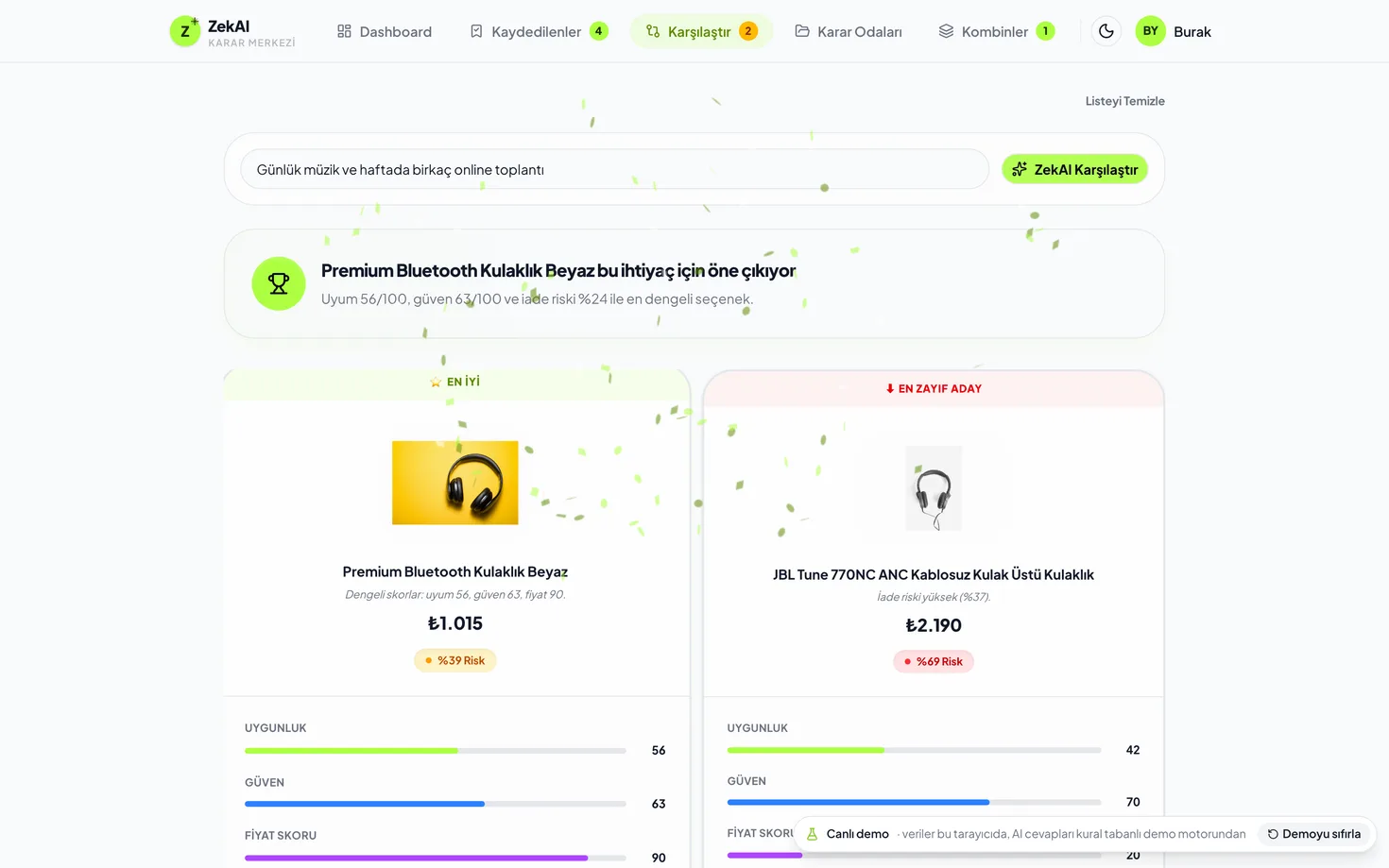
Comparison: two headphones, a winner for the buyer's need and a reason for each product -
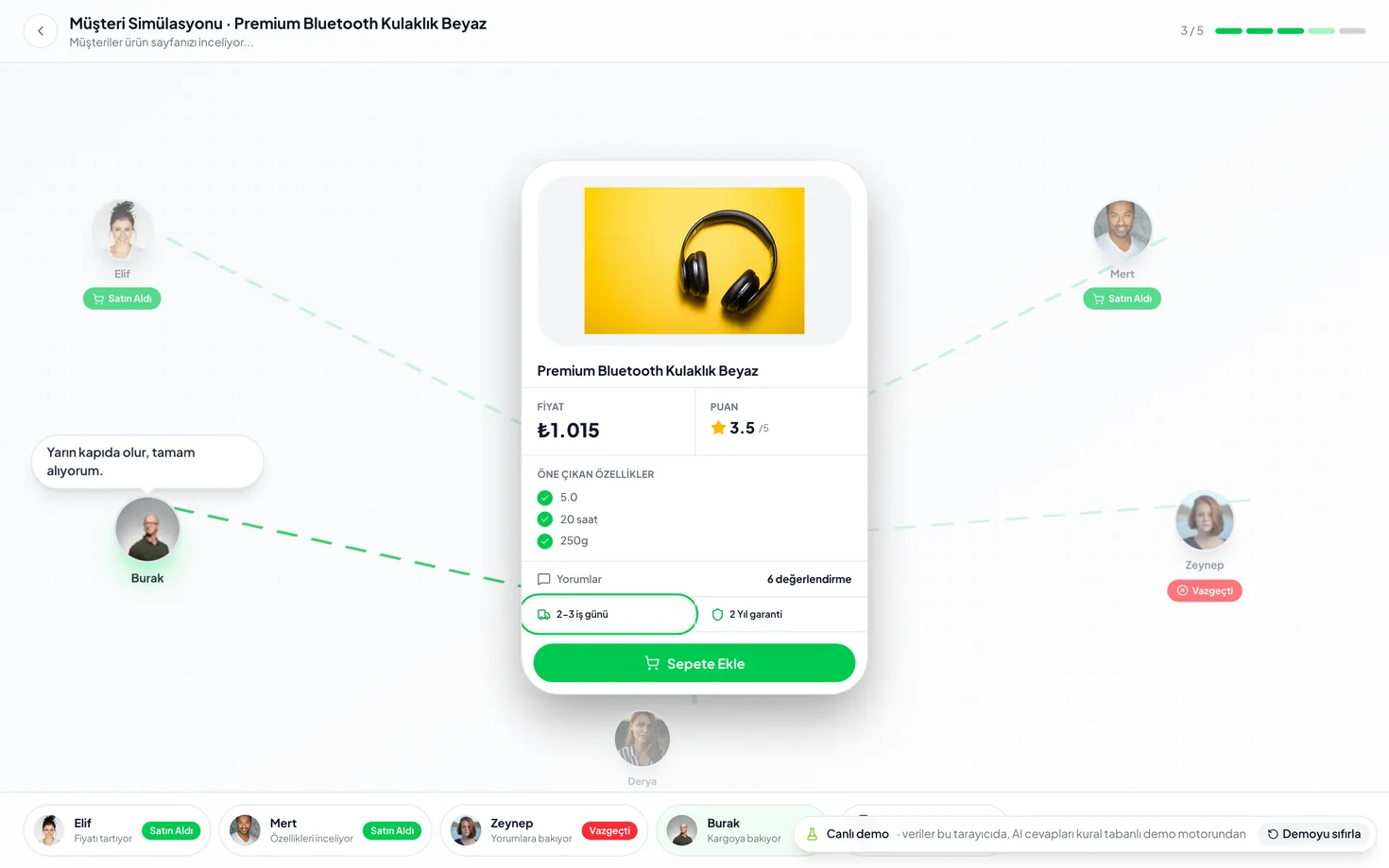
Customer simulation: five customer profiles each look at the part of the page they care about -
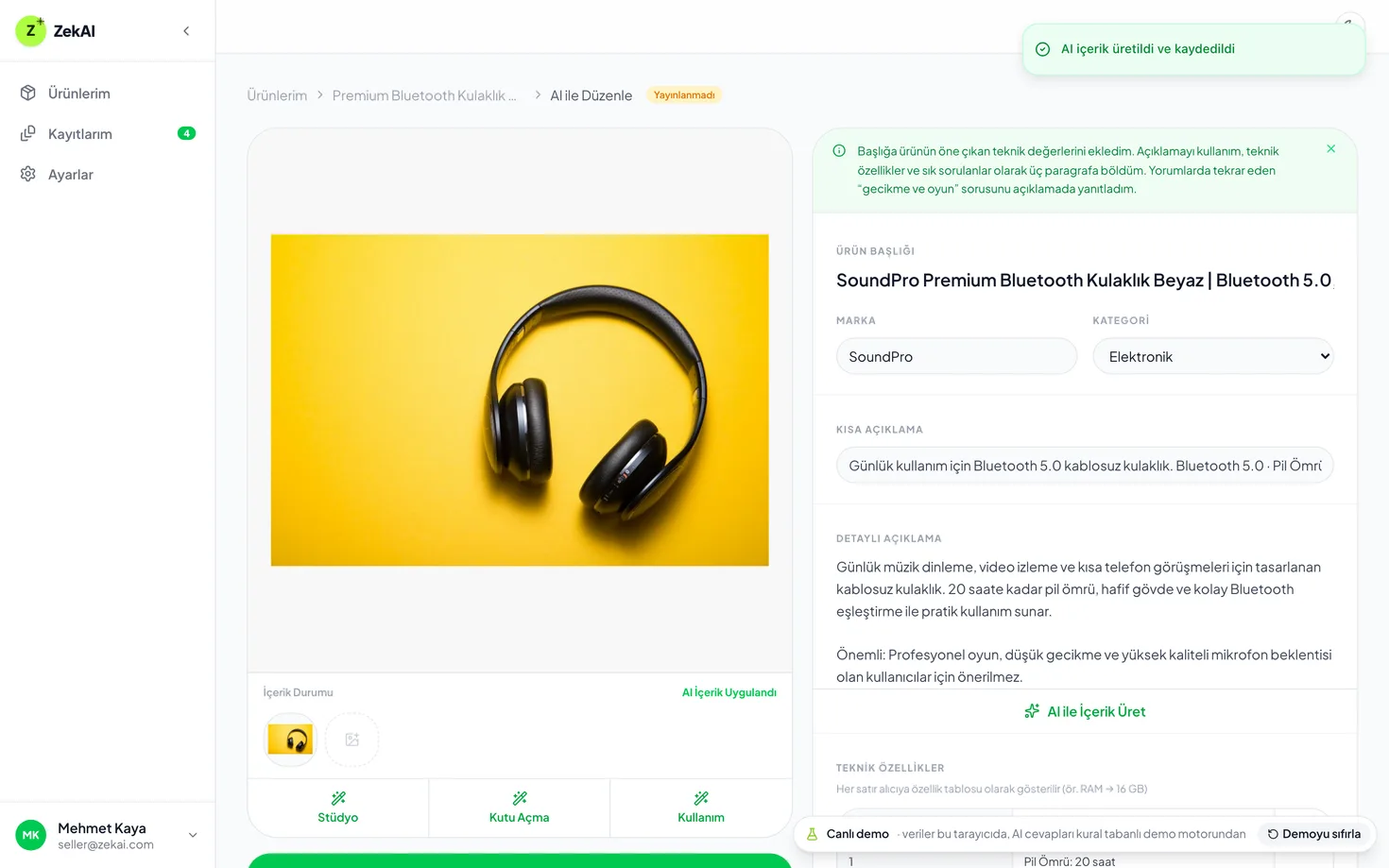
Content with AI: a new title, descriptions, feature bullets and product images -
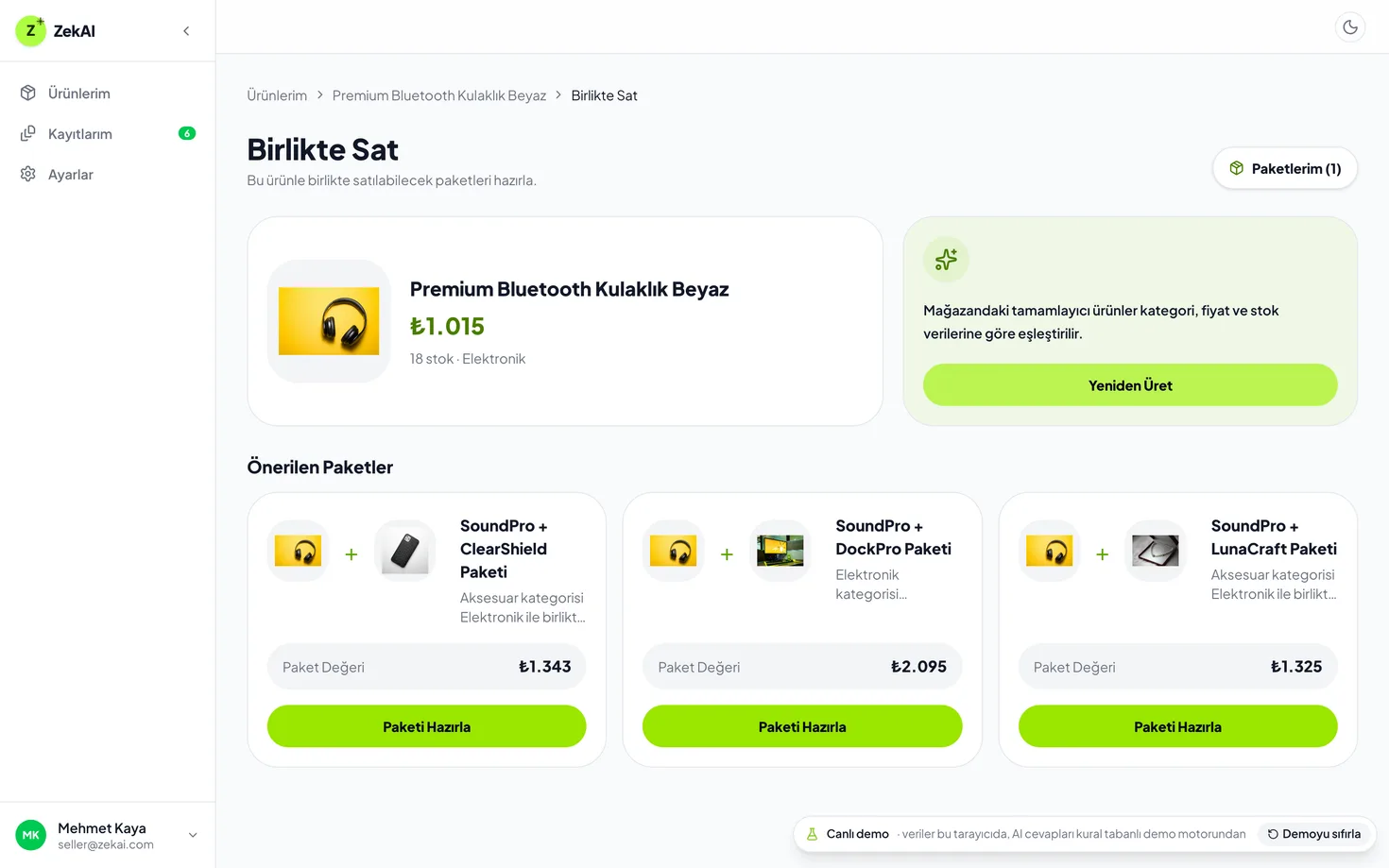
Sell together: complementary product suggestions and discounted bundles -
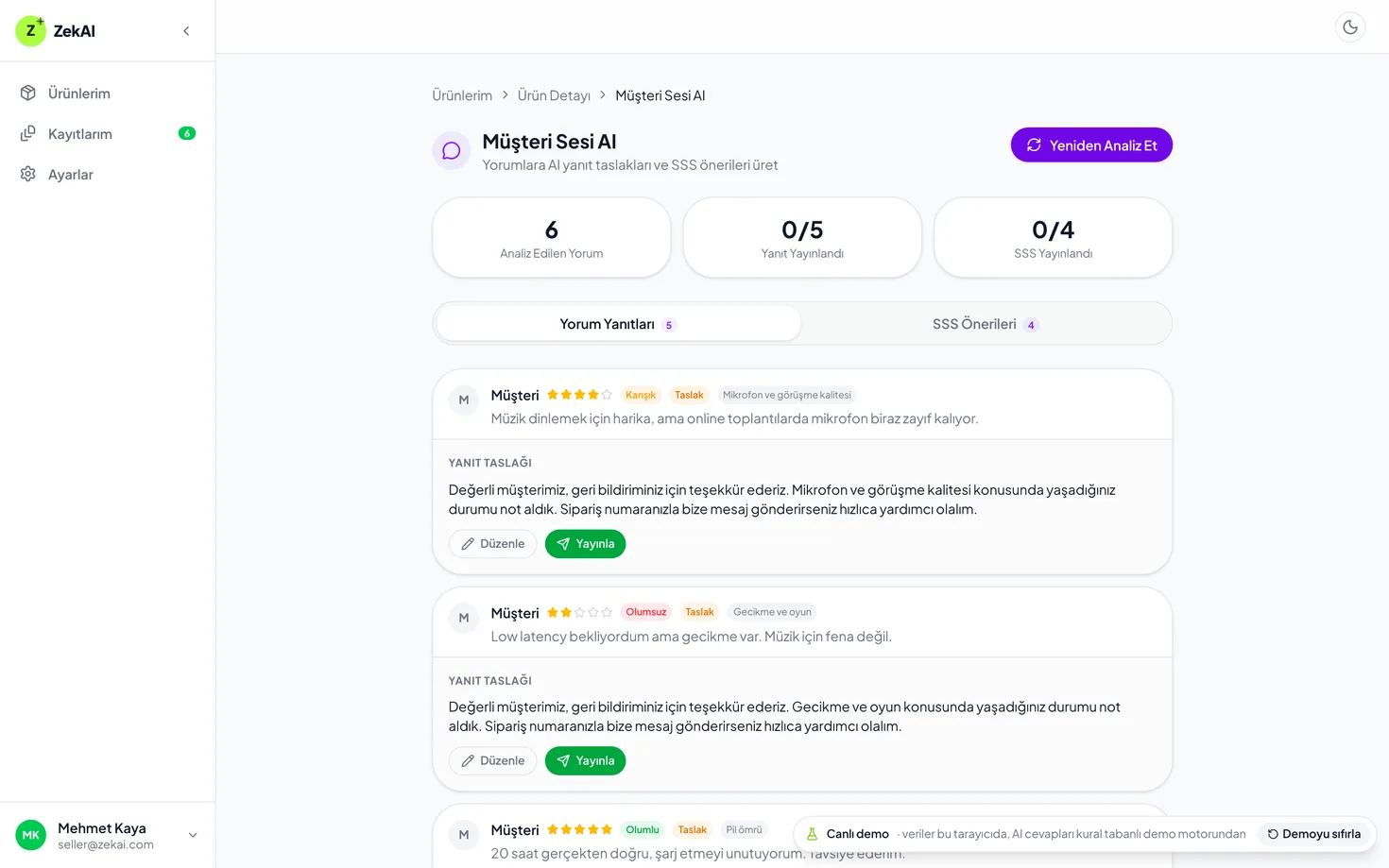
Customer Voice: a draft reply for every review and FAQs drawn from the reviews -
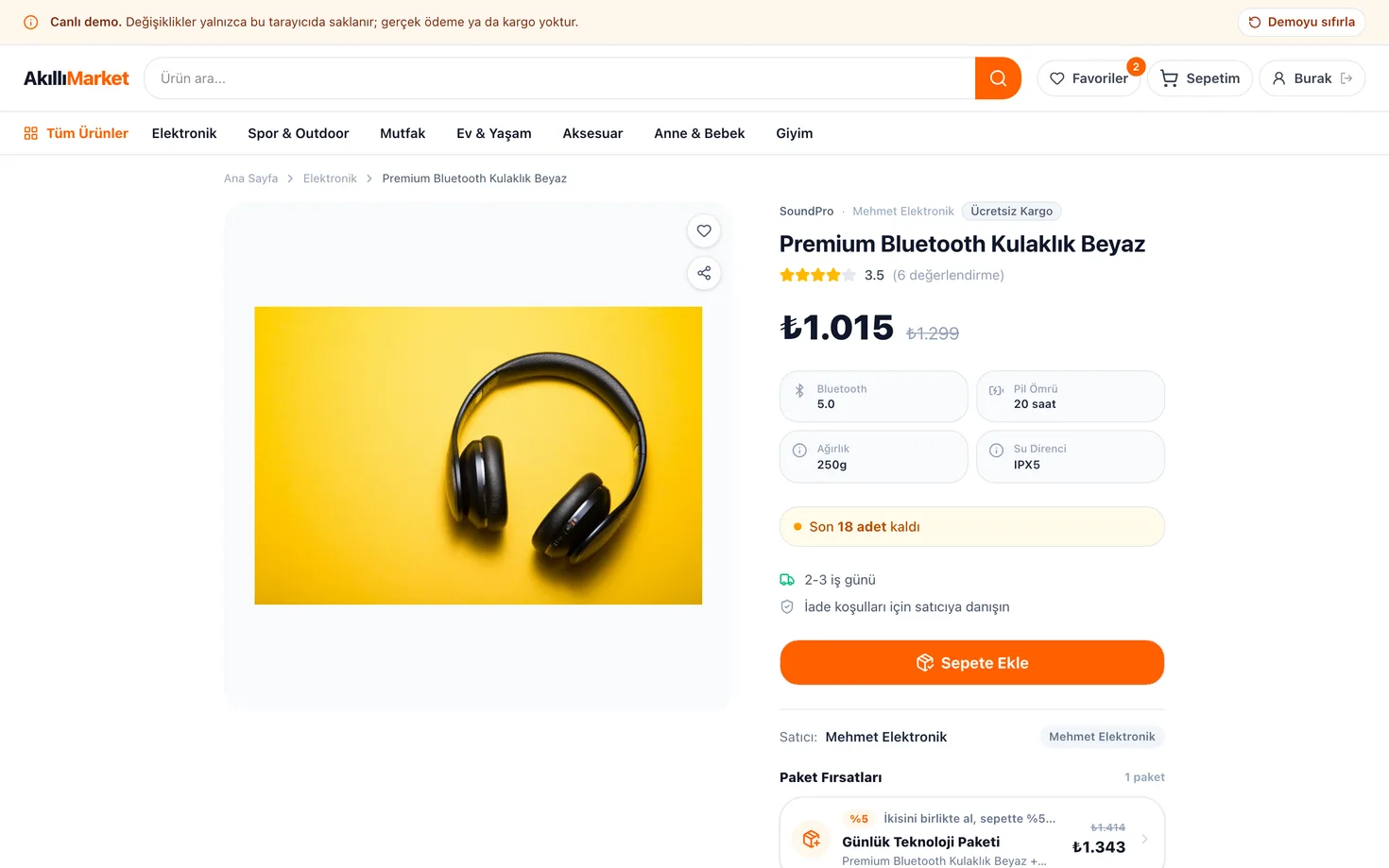
Akıllı Market: a product page and bundle deals on the marketplace ZekAI connects to -
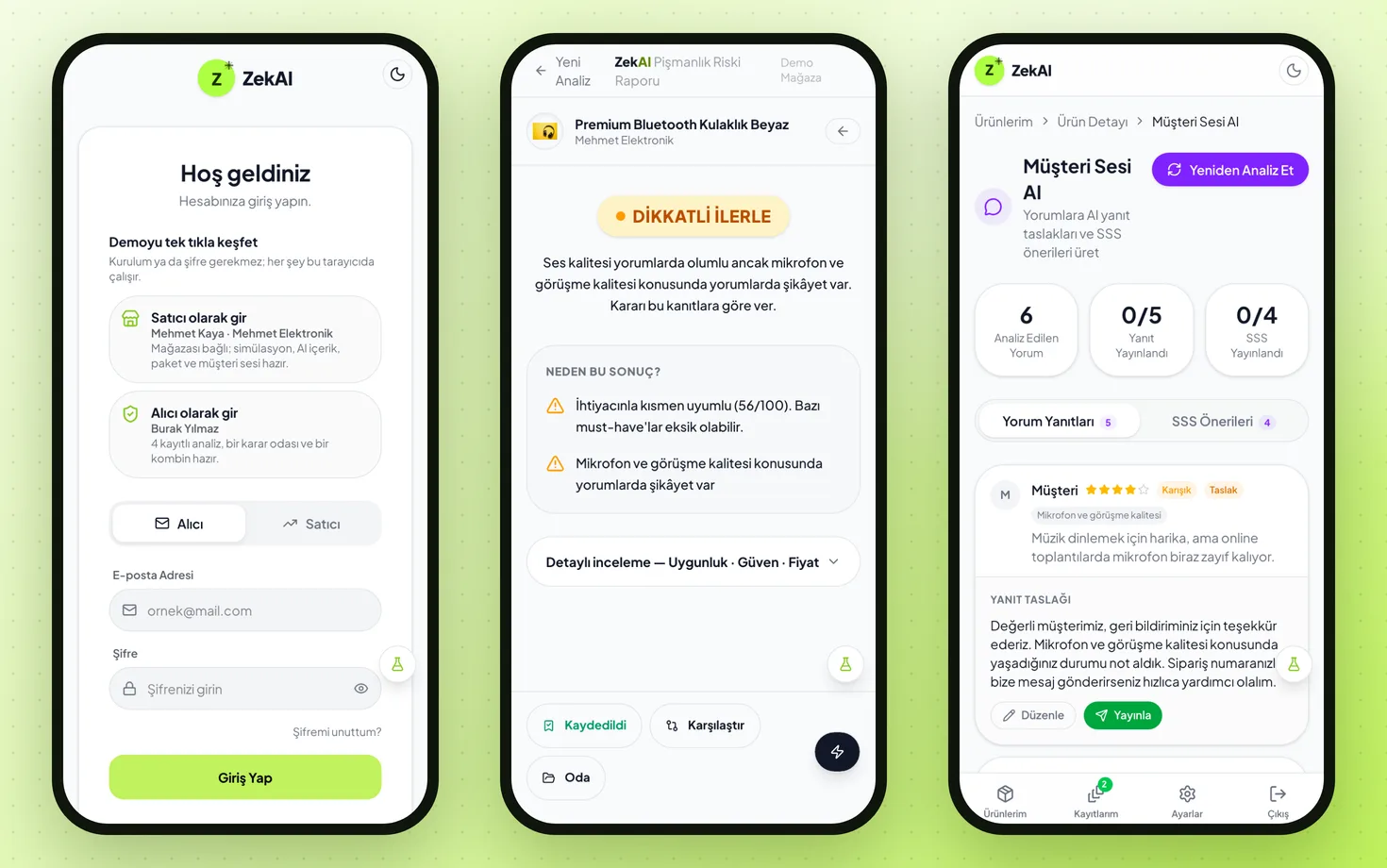
Phone interface: the one-click demo sign-in, an analysis verdict and the seller's Customer Voice screen -
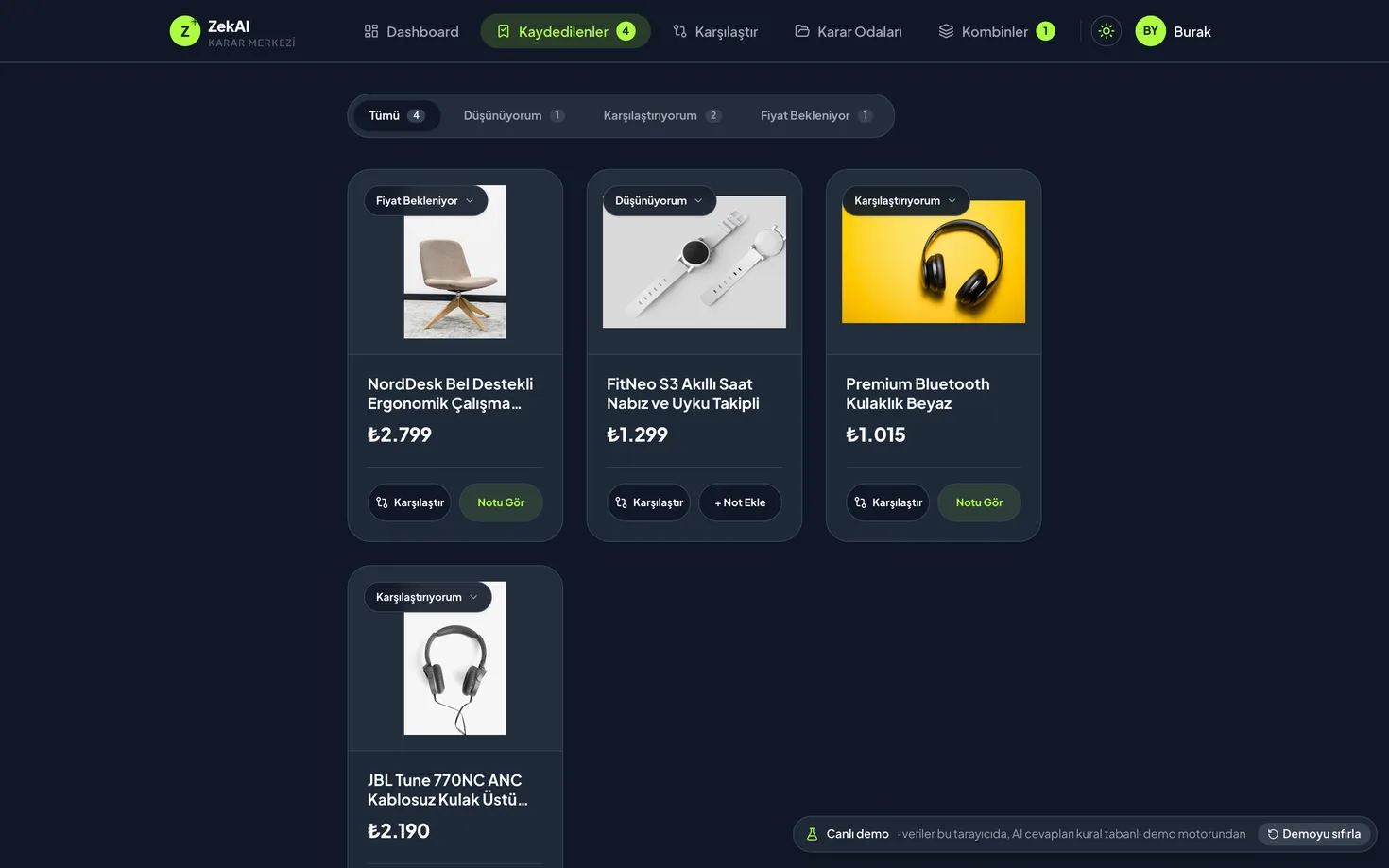
The dark theme: saved analyses, each with a status and a note -
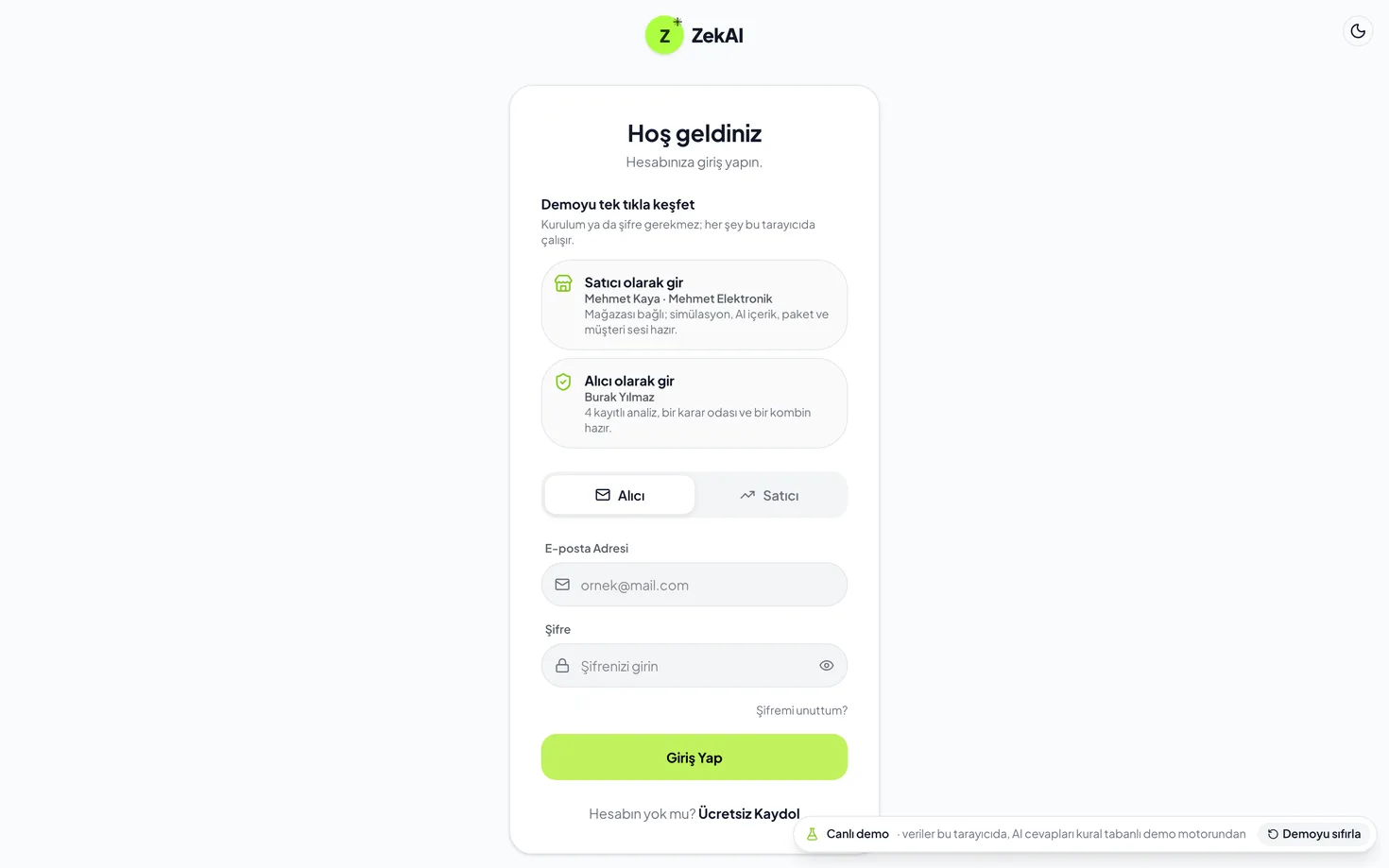
The live demo's sign-in page: one click as a seller or a buyer