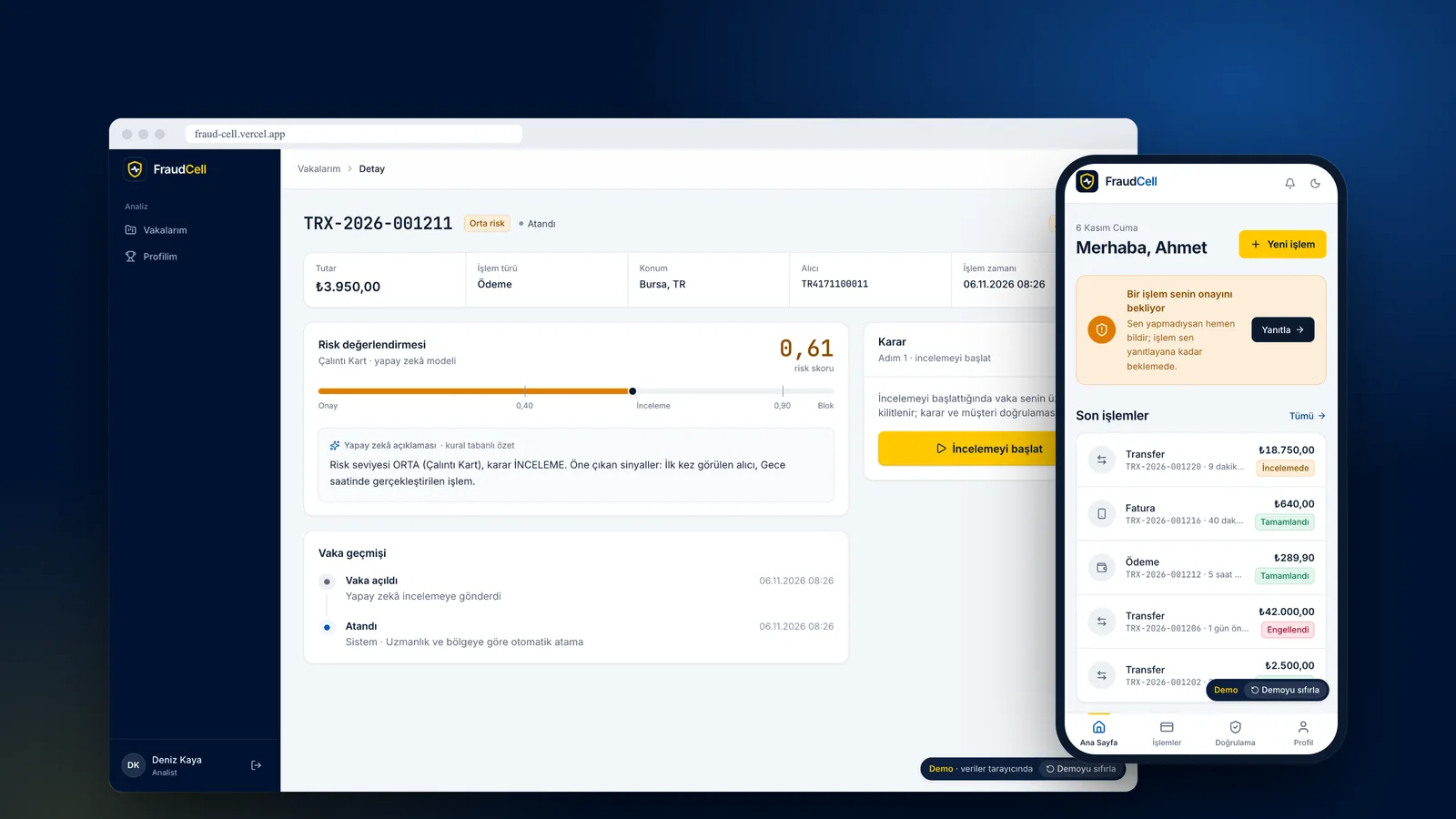
Code Night 2026 All-Star Finalist Project
FraudCell
A fraud operations platform where AI and analysts work together
My two-person team built this project overnight at the Turkcell Code Night 2026 All-Star final; after the event I turned it into a real microservice system. Every payment is scored by AI, risky ones go to an analyst with the right specialty and are tracked against an SLA, and when needed the customer is asked "was this you?". In the live demo you can sign in as customer, analyst, supervisor or administrator with one click and no password, and see the same case from four sides.
- Technologies
- .NET 10
- ASP.NET Core 10
- EF Core 10
- YARP 2.3
- PostgreSQL 18
- RabbitMQ 4.3
- Python 3.13
- FastAPI
- scikit-learn 1.5
- React 19
- TypeScript 5.9
- TanStack Query
- Tailwind CSS 4
- Docker
- Playwright
- My role At the Turkcell Code Night 2026 All-Star final my teammate Ayşe Mandıralı and I were a two-person team, and I was the captain. That night Ayşe wrote the architecture documents, the first versions of the Identity and Transaction services and the frontend's foundation; I connected the services and built the AI-down flow, the demo flows and the UI. I did the post-event completion on my own. I wrote a significant part of the code with an AI assistant (Claude Code), under rules I set.
What I did
- When the night ended the system worked, but it didn't start on a clean machine: the Postgres init script wasn't executable and the model files weren't in the repository. I split the work into a nine-step plan; every step became its own PR, and none was merged without green CI. Today every PR brings the whole system up with docker compose up on a clean machine and replays the case's mandatory demo flow.
- Four services shared one Postgres and one key file. I gave each service its own Postgres and private network, and other services' data now arrives through event-fed projections. The signing key lives only in Identity; the others validate tokens through JWKS.
- Services talk over RabbitMQ. An event is written to the outbox in the same database transaction as the business data, and consumers use an inbox so the same event is never applied twice. CI stops every container in turn, RabbitMQ included, and checks that the system recovers.
- If the AI service fails, payments don't stop: a transaction with no result within 5 seconds opens with an unknown risk in the manual queue. I noticed even healthy traffic ending up there: the outbox was polled every 2 seconds while the deadline was also 2 seconds. I re-sized the deadline from the real length of the chain.
- In the hackathon version every block earned +15 points, which pushed analysts to block everything. I defined the customer's answer as the only source that knows whether a decision was right. I wrote a test that caught the bug first, then tied points, badges and the model's accuracy metrics to that answer.
- So that the first assignment isn't lost when two supervisors assign the same case at once, every record has a version: writes require If-Match, and a stale version gets 412. Rules such as one active assignment per case and at most 10 cases per analyst are also enforced in the database with filtered unique indexes and check constraints.
- The case listed the attacks the jury would try. I wrote them all into a script: IDOR, a role matrix, tampered JWTs, SQL injection, XSS, brute force and a reused refresh token. 96 checks run against the real system on every PR. During that audit I found and closed a hole that let customers read staff points.
- I measure the model honestly: the calibrated risk model's recall is 0.52, so about half of the frauds slip through, and I say so in the docs and the model card. 120 Turkish scenarios that are never used for training form a separate acceptance set, and I fixed the night feature being computed in UTC.
- I rebuilt the interface as a case-management tool: a dense case table and a sticky decision panel for analysts, a dashboard that opens with the cases needing action for supervisors, and for customers the outcome of a transaction instead of a risk level. The live demo answers the same API contract in the browser, and no demo code ships in the real build.
The problem
Fraud in digital payments happens in seconds; a person can't review every transaction, and blocking everything automatically hurts real customers. The Code Night case asked for the balance: AI finds the risky ones, the right analyst decides within an SLA, the customer takes part in the process and analysts stay motivated. And when a component fails, no transaction may be lost.
What it offers
When an analyst opens the screen, the riskiest and most urgent case is on top with its SLA counting down; they can read why the score is high, ask the customer, and focus on one next step. The supervisor's dashboard shows the cases needing action first, then workload and model accuracy. The customer follows a transaction's outcome and progress like a receipt, and the moment they say "it wasn't me" the transaction is put on hold.
-
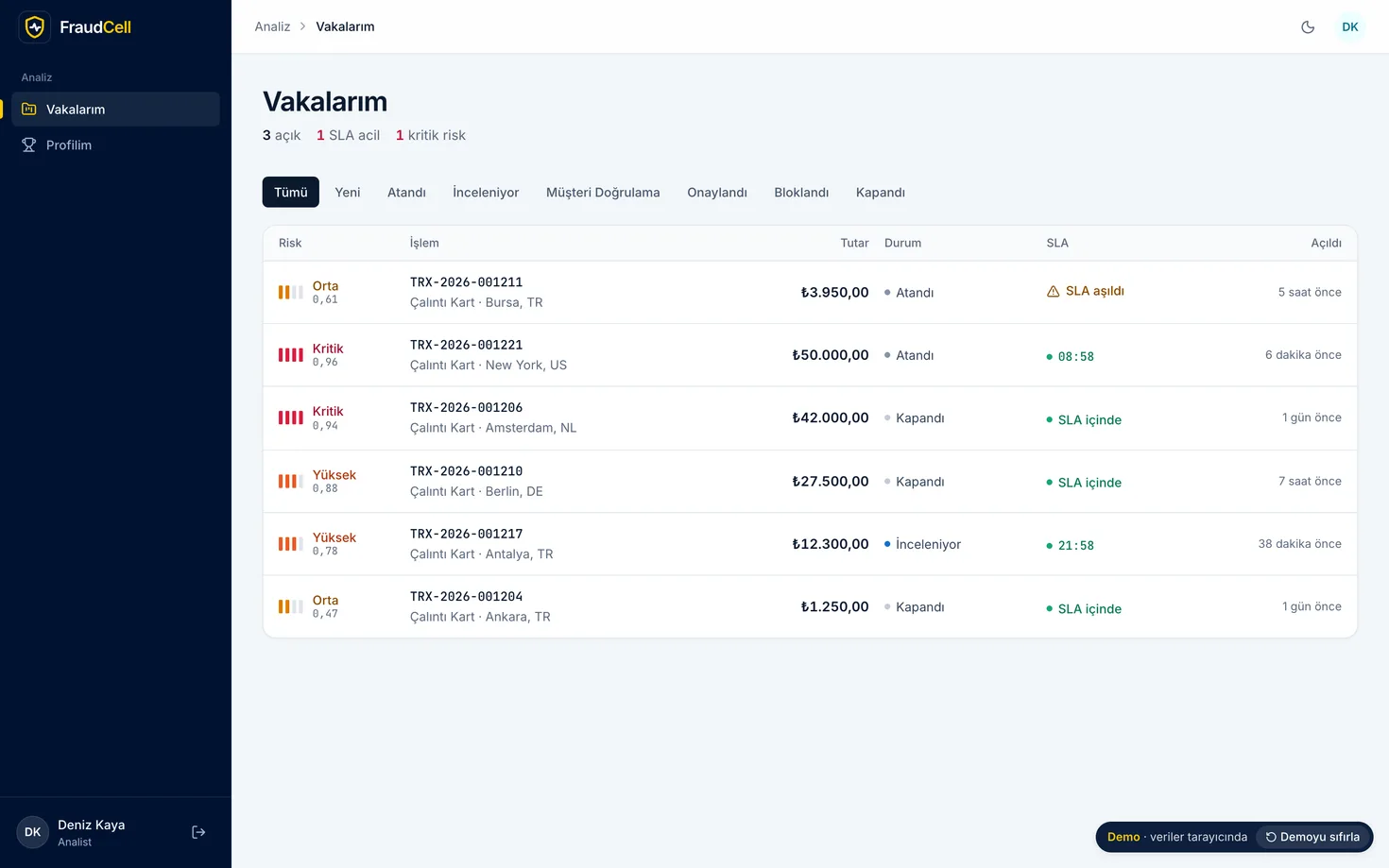
The analyst's inbox: the riskiest and most urgent case on top, with a live SLA countdown -
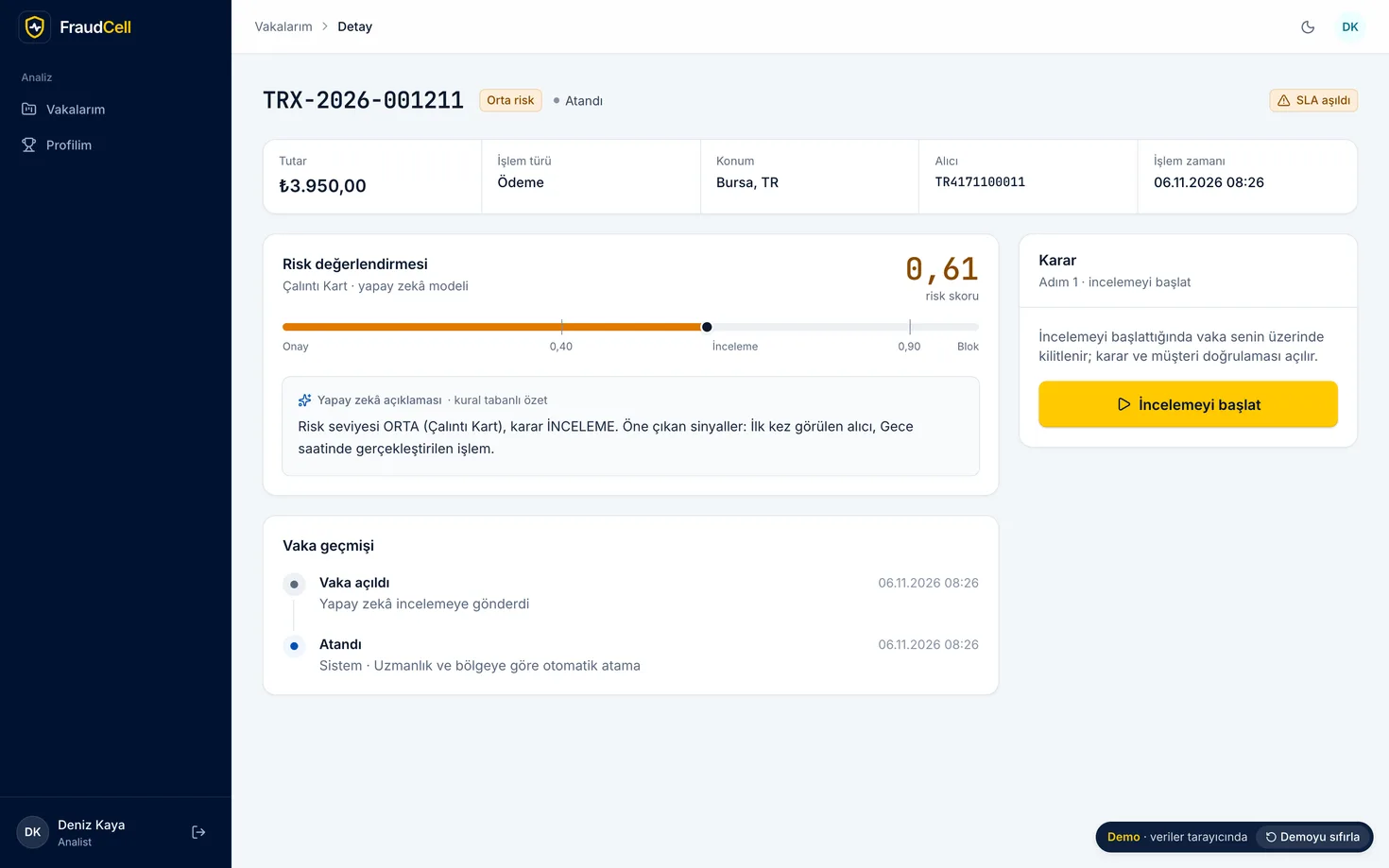
The case workspace: the risk meter with its 0.40 and 0.90 thresholds, the AI's reasons, the case history and the decision panel -
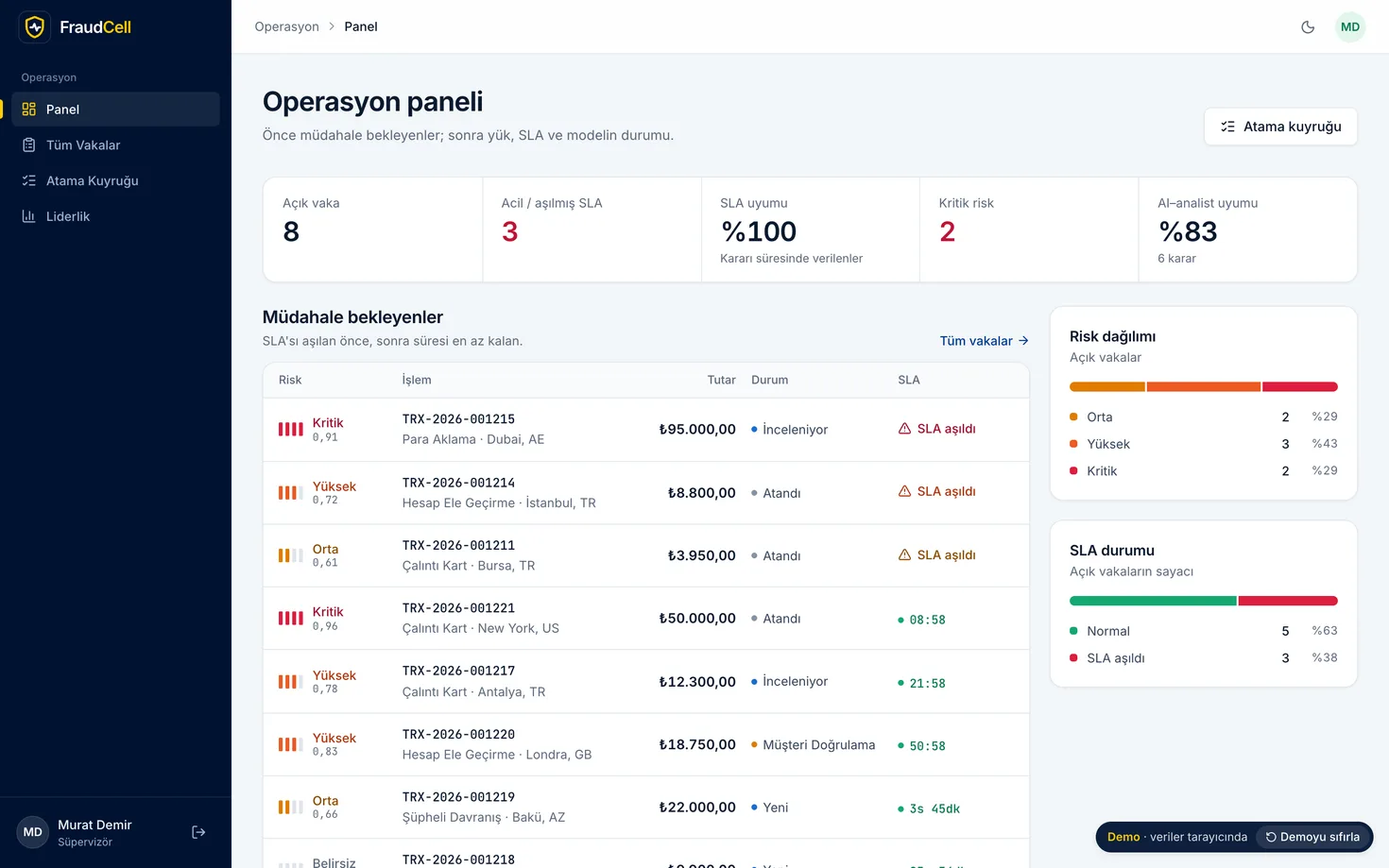
The supervisor dashboard: cases needing action first, then risk and SLA distribution and model accuracy -
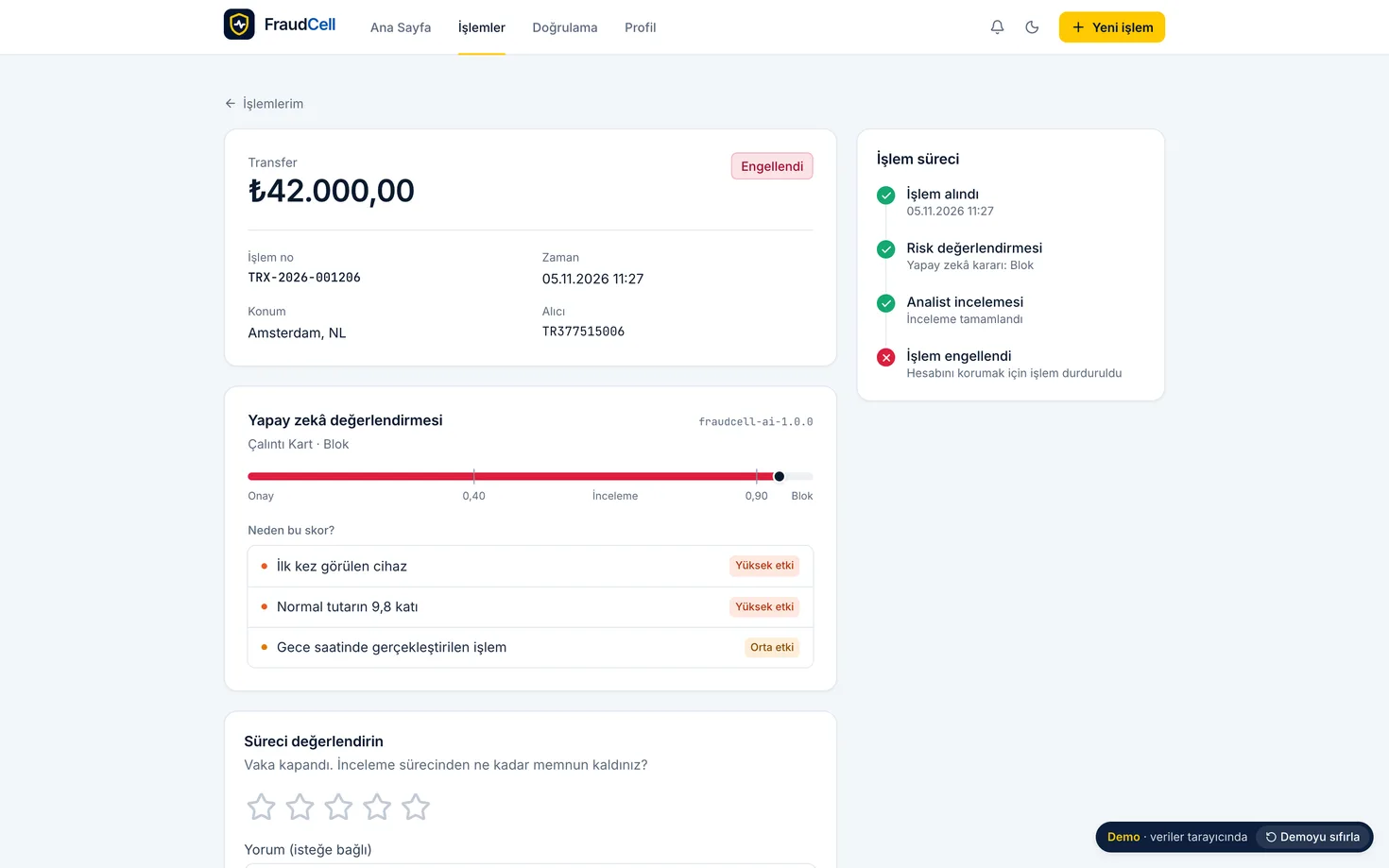
The customer's transaction receipt: the outcome, its progress, the AI's reasons and a 1–5 star rating -
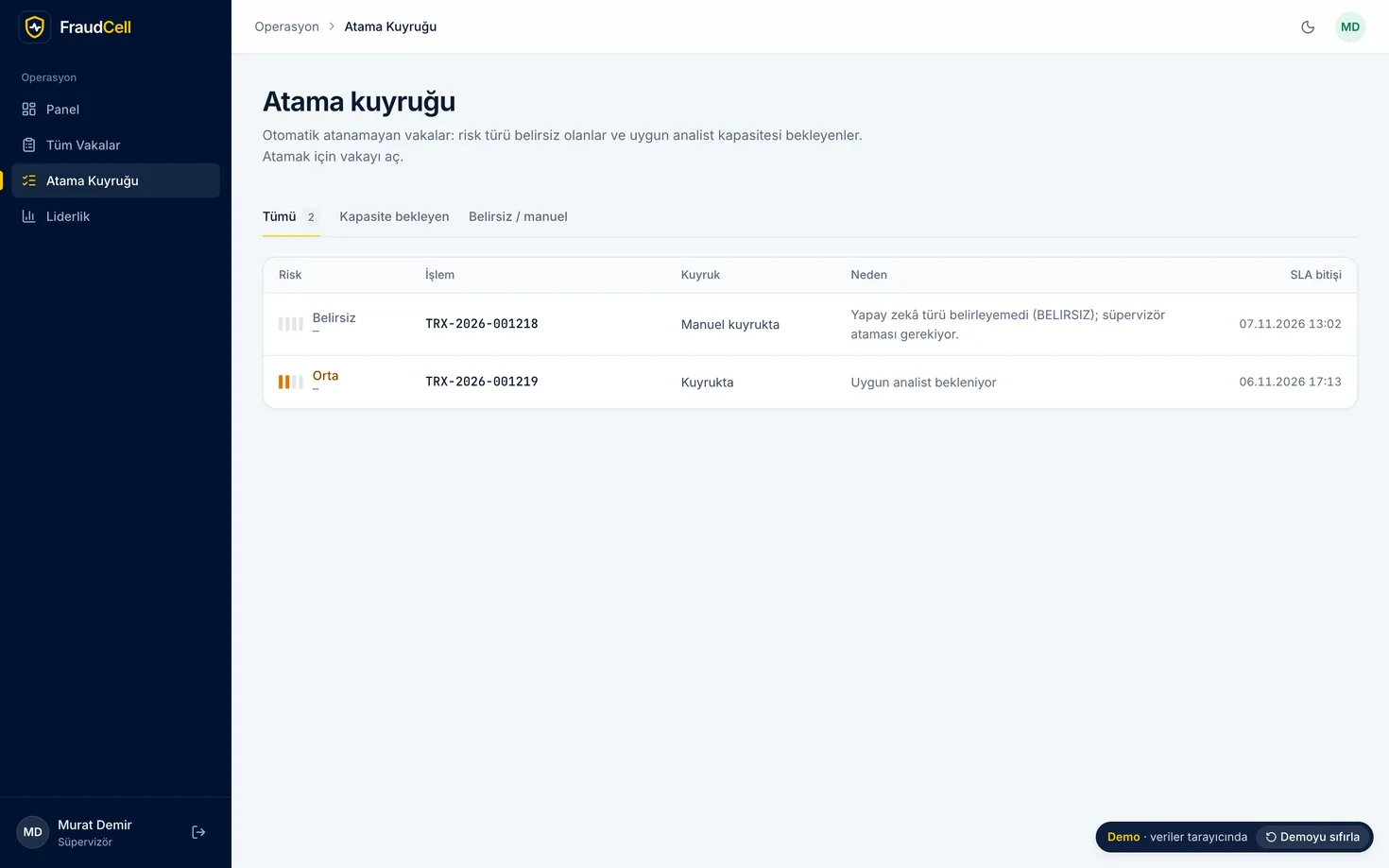
The assignment queue: cases with an unknown type and cases waiting for analyst capacity -
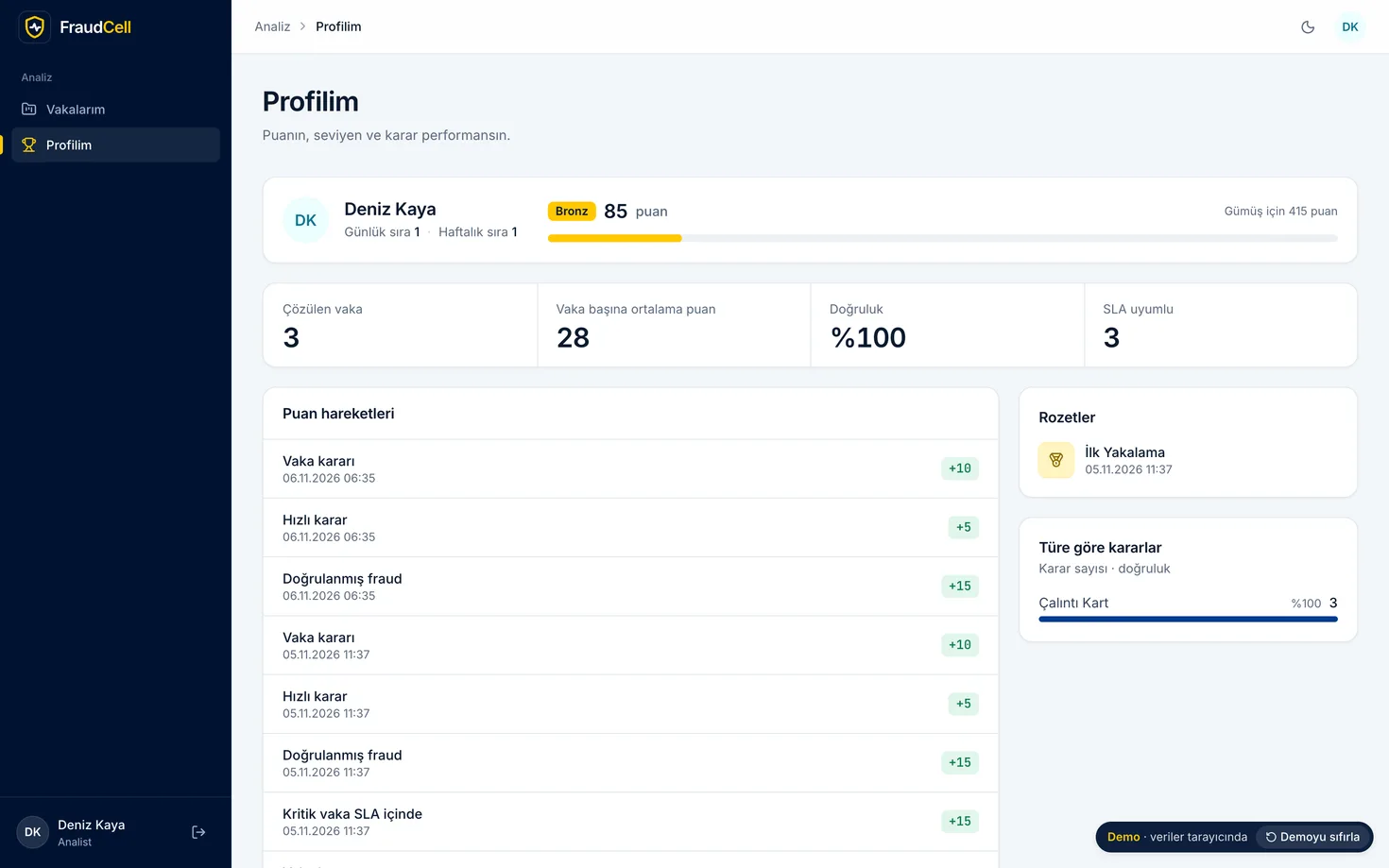
The analyst profile: the level bar, the point history and badges -
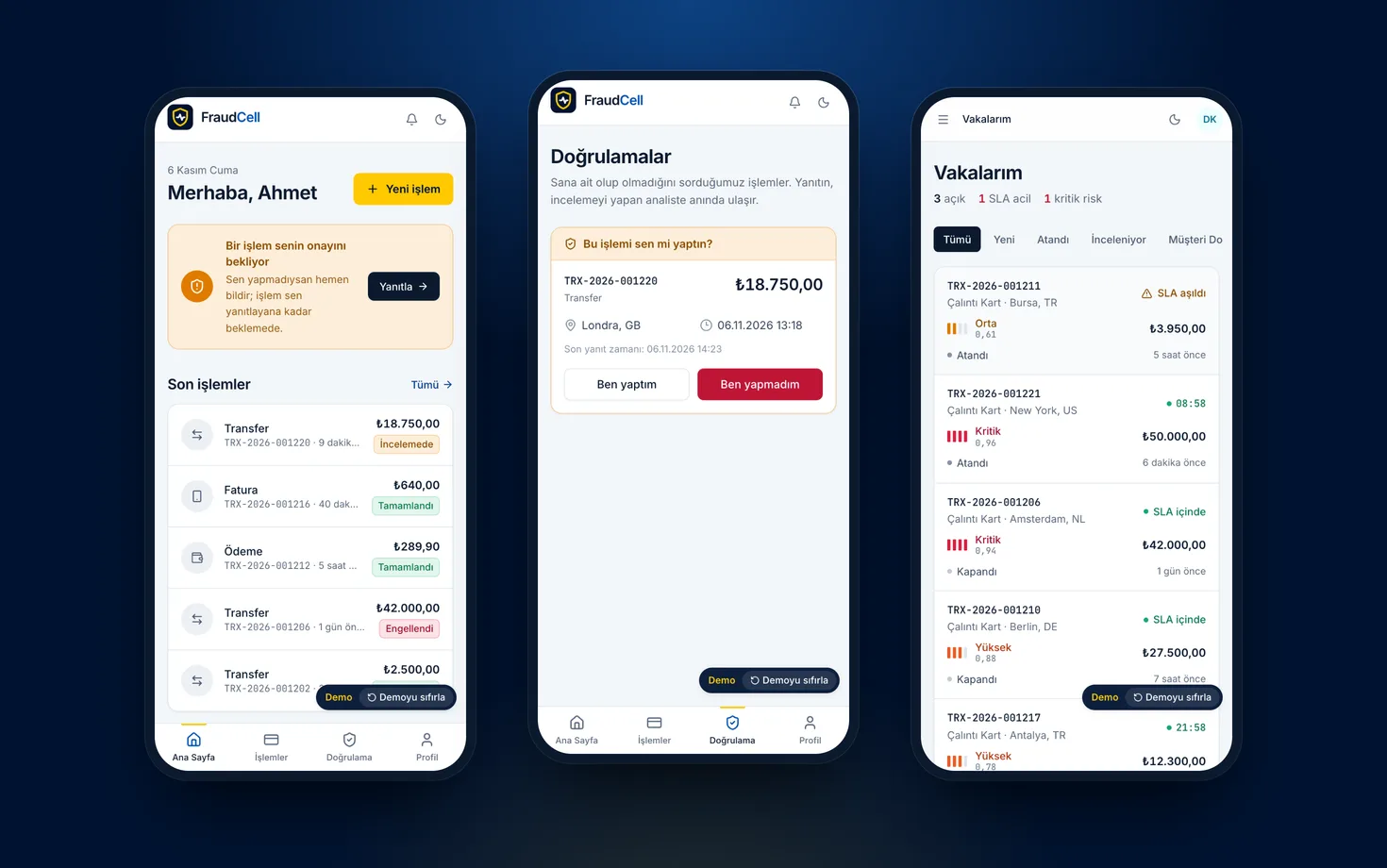
Phone interface: the customer's home page, the "was this you?" question and the analyst's case list -
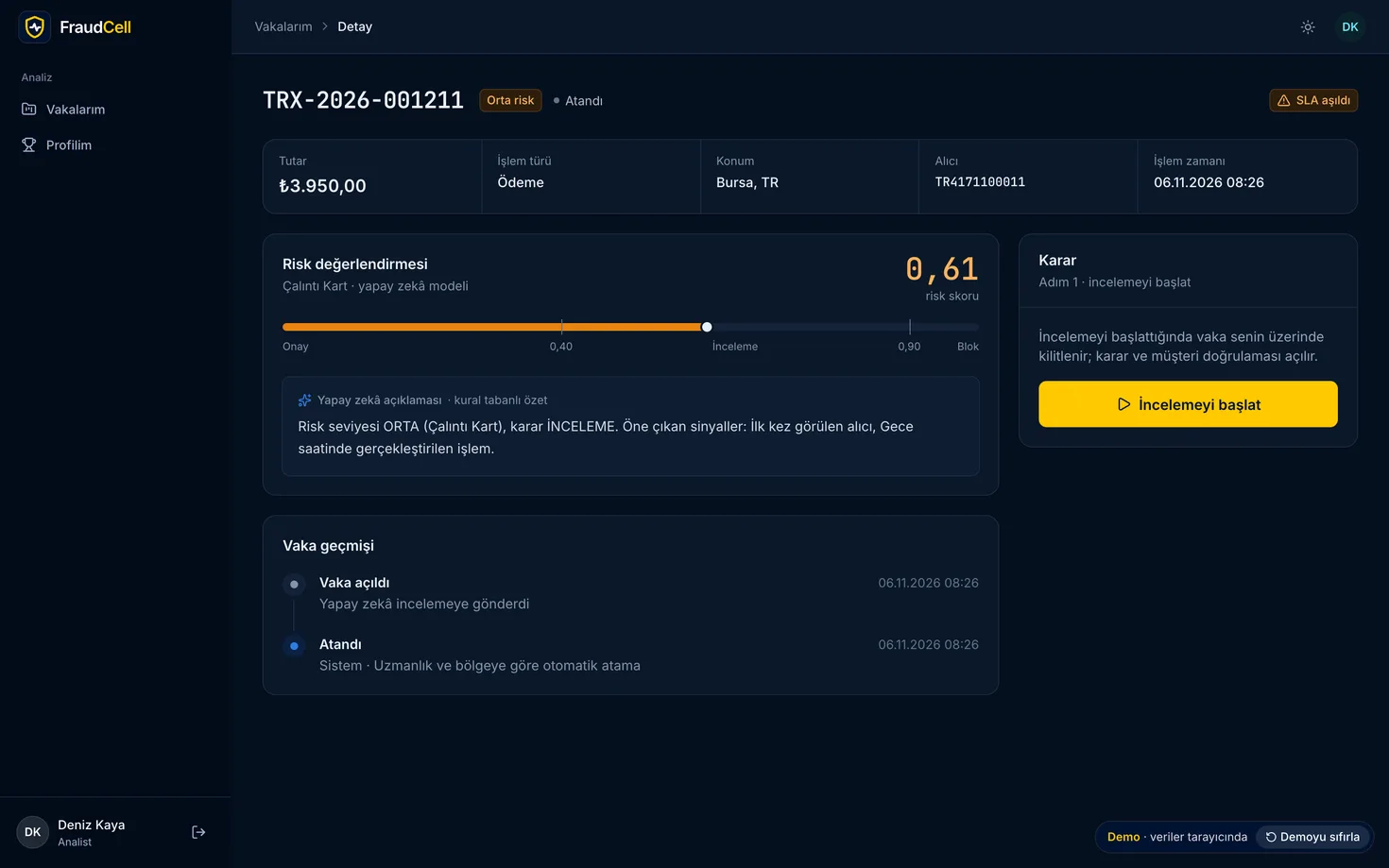
Dark theme: the same case screen in Turkcell navy -
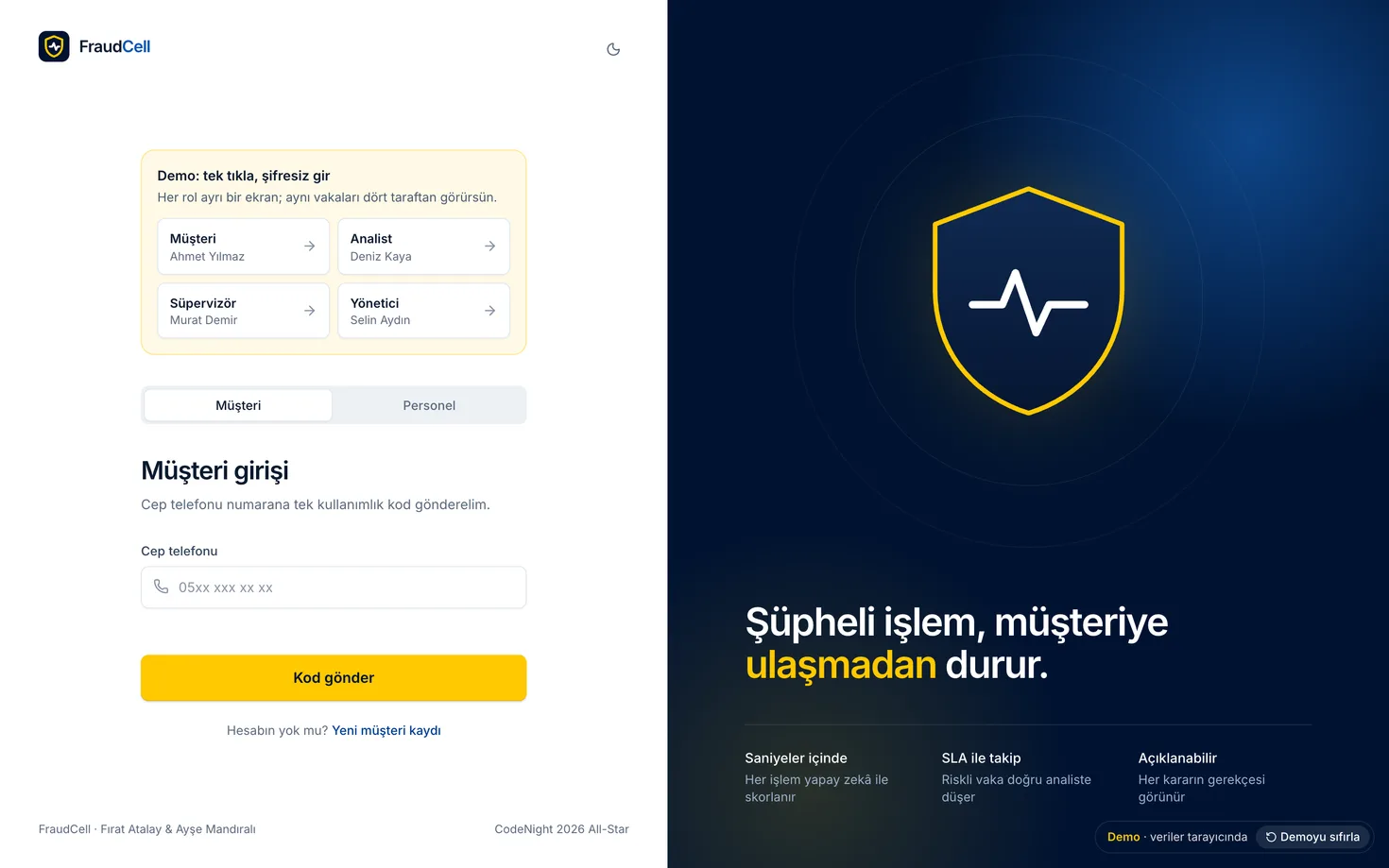
The live demo's sign-in page: one-click, password-free sign-in for each of the four roles